

Solar Only vs Solar Plus Battery: Which Is Worth It for Your Gosford Home?
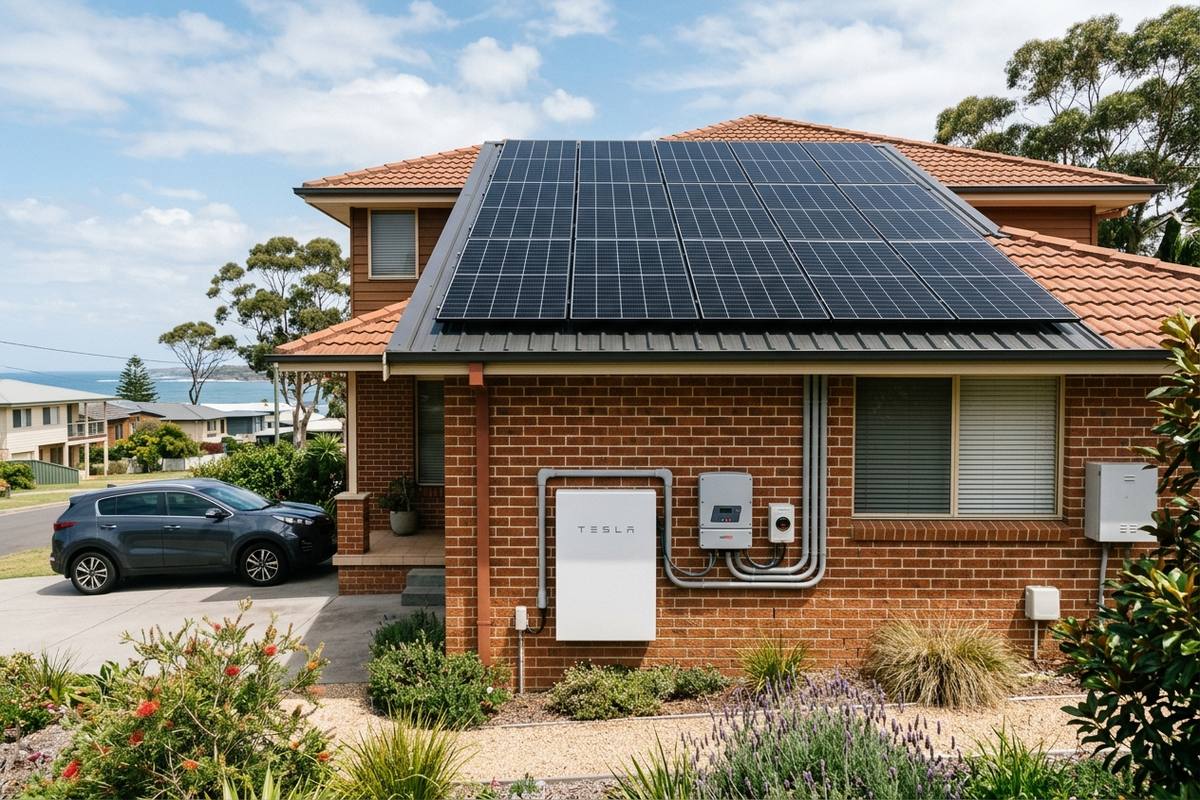
If you're considering solar for your Gosford home, the next question is often whether to add battery storage now or stick with solar alone for now. It's a significant decision with real cost implications either way. Here's a practical comparison to help work out which suits your situation.
What Solar Alone Delivers
A solar system without a battery works like this: during daylight hours, your panels generate power. Any power your home uses immediately is offset from your grid consumption. Any surplus power is exported to the grid, for which you receive a feed-in tariff from your energy retailer. At night or when your panels aren't producing enough, your home draws from the grid at normal retail prices.
The economics of solar-only systems depend heavily on when you use power. Households that run appliances during daylight hours get better value because they're self-consuming their solar rather than exporting it at a lower rate. Households that are empty during the day and use most of their power at night get less value because most of their solar is exported cheaply and they buy back at premium rates.
What Adding a Battery Changes
Adding a battery lets you store the surplus power your panels generate during the day rather than exporting it. You then use that stored power in the evening and overnight, offsetting grid consumption during peak rate periods.
For most Australian households, peak electricity rates are significantly higher than feed-in tariffs. This means storing a kilowatt-hour of power rather than exporting it can save several times more than the export earned. Over time, this difference adds up, and the battery pays for itself through reduced grid consumption.
When Solar Alone Makes Sense
Solar alone makes sense if you can genuinely shift your major electricity usage to daylight hours. Working from home, running pool pumps and dishwashers during the day, and doing laundry in the afternoon all increase self-consumption and improve solar-only returns.
If the upfront cost of a battery is outside your budget but solar alone is affordable, starting with solar and adding a battery later is a valid approach, provided your solar system is installed with a hybrid inverter that will accept a battery down the track. This is a decision to make at the original install, not after.
For homes that already have low electricity usage, the marginal savings from adding a battery may not justify the upfront cost for many years.
When Solar Plus Battery Makes Sense
Solar plus battery makes stronger economic sense for households that use most of their power in the evening and overnight, families with kids, households where everyone works away from home during the day, or homes with air conditioning that runs in the evening.
If blackouts are a concern in your area and you want backup power during grid outages, a battery delivers that benefit in addition to the bill savings. Most modern battery systems can keep essential circuits running during an outage, which standard solar-only systems can't do.
Households with an EV or planning to add one soon benefit significantly from batteries. Charging your car overnight from stored solar power effectively turns your daylight sun into free fuel.
Future-Proofing Either Way
Whether you start with solar alone or go straight to solar plus battery, the key thing is installing a hybrid inverter from day one. A hybrid inverter accepts both solar and battery inputs, so you can add a battery later without replacing the inverter. A standard string inverter would require replacement or additional equipment to accept a battery down the track.
The extra cost of a hybrid inverter upfront is far less than the cost of replacing or supplementing a standard inverter later. This is one of the most important decisions to get right at the initial install, regardless of whether you're adding a battery now.
Getting Specific Advice
The right answer for your home depends on your actual electricity usage patterns, your budget, and your priorities. A good solar installer will analyse your electricity bills, understand when you use power, and give you honest advice about whether a battery is likely to deliver strong value in your specific situation.
Be wary of installers who push batteries regardless of the household situation. For some homes, a battery genuinely isn't the best use of money. A good installer will tell you this rather than selling you something you don't need.
Frequently Asked Questions
Can I start with solar and add a battery later?
Yes, as long as your initial solar system is installed with a hybrid inverter. Adding a battery to a hybrid-inverter solar system is relatively straightforward. Retrofitting a battery to a non-hybrid system is more complex and expensive.
How long do home batteries last?
Most batteries come with warranties around 10 years covering a set number of charge cycles and retained capacity. Actual lifespan depends on usage patterns and environmental conditions.
Do batteries work during a blackout?
Most modern batteries can provide backup power during grid outages if the system is configured for this. The level of backup depends on the battery capacity and how the system is wired.
Is a battery worth it without solar?
Generally no. Batteries make financial sense when paired with solar because the savings come from using stored solar rather than grid electricity. Without solar, a battery just stores grid electricity with limited economic benefit for most households.
Talk to a Local Central Coast Electrician
Get a free, no-obligation quote from a licensed electrician serving gosford and the Central Coast.