
How Long Do Solar Panels Really Last on the Central Coast?
One of the most common questions from homeowners considering solar is how long the panels will actually last. Marketing often talks about 25 to 30 year warranties, but the real-world lifespan in Central Coast conditions is worth understanding properly. Here's what to actually expect.
The Two Types of Solar Panel Warranty
Solar panels come with two separate warranties that are worth understanding. The product warranty covers manufacturing defects, if a panel fails due to a fault in how it was built, the manufacturer replaces it. This warranty is typically 10 to 15 years for standard panels and up to 25 years for premium panels.
The performance warranty is different. It guarantees that the panels will still produce a certain percentage of their original output after a specific period. A typical performance warranty might guarantee 85% of original output at 25 years. This is the more meaningful warranty for understanding actual long-term value, because it addresses the gradual efficiency loss that all solar panels experience.
How Solar Panels Degrade Over Time
Solar panels lose a small amount of efficiency each year as the materials age. The rate of degradation is typically expressed as a percentage per year, with quality panels losing around 0.25% to 0.5% per year. After 25 years, this means a panel that originally produced 400 watts might be producing around 340 to 360 watts, still a significant amount of power.
The first year of operation typically shows a slightly larger drop as the panels settle in, then the degradation continues at a steady, predictable rate. For Central Coast homeowners, this means a well-installed system will still be producing useful amounts of power well into its third decade.
What Affects Lifespan in Practice
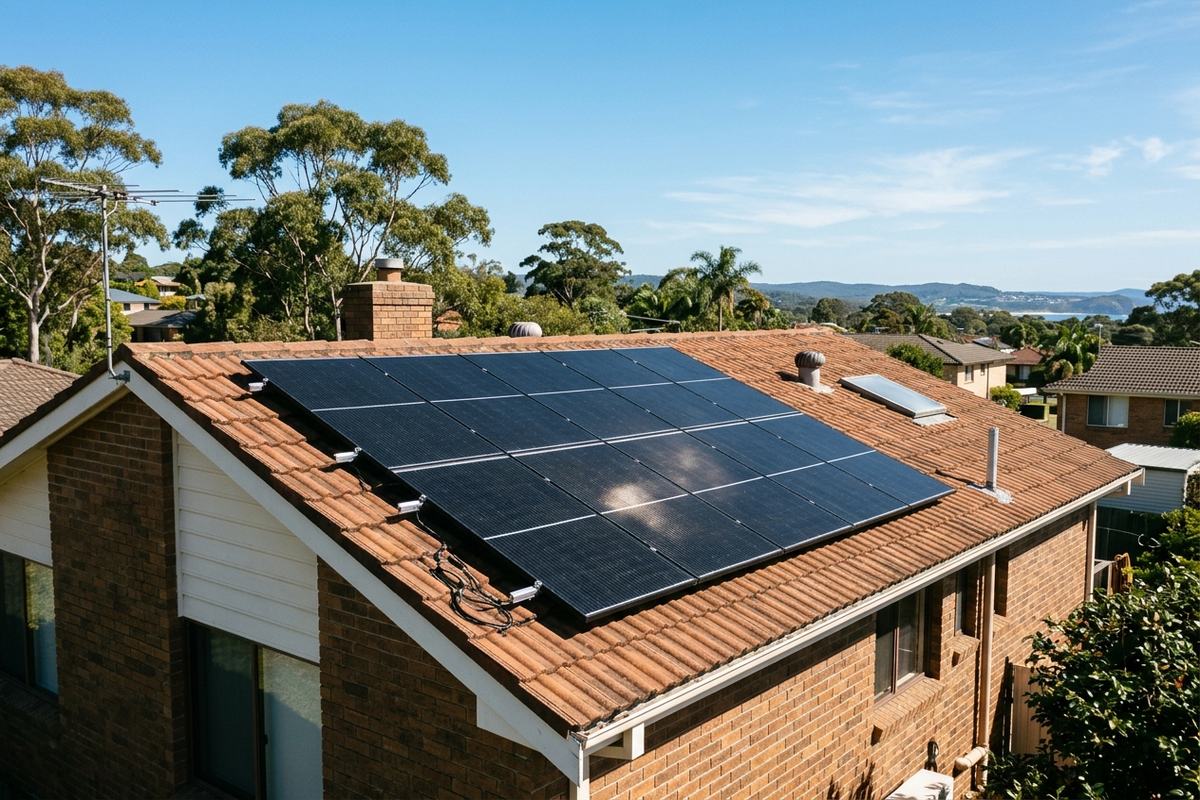
Several factors influence how long panels actually last on a Central Coast home. Installation quality is the biggest variable. Panels mounted correctly with proper flashing, weatherproof connectors, and good cable management will last significantly longer than panels installed by inexperienced installers who cut corners.
Environmental conditions also play a role. The Central Coast climate is generally favourable for solar, we don't have the extreme heat of inland Australia or the heavy snow of colder regions. Coastal salt exposure is the main environmental factor, and quality panels with marine-rated components handle this well.
Regular maintenance makes a measurable difference. Panels that are kept clean and inspected periodically will outperform panels that are left to accumulate dirt, bird droppings, and debris. Most homeowners don't need to do more than an occasional hose-down, but an annual professional inspection can catch issues early.
What Usually Fails First
In a well-installed system, the panels themselves rarely fail outright, they just gradually lose efficiency. What tends to fail first is the inverter, which converts DC power from the panels into AC power for your home. Most inverters have a shorter lifespan than the panels, typically 10 to 15 years, and most systems will need at least one inverter replacement during the lifetime of the panels.
Connections, isolators, and cabling can also develop issues over time, particularly if the original installation wasn't done properly. Regular inspections by a qualified solar electrician can identify and address these issues before they affect system performance.
When It's Time for Replacement
For most Central Coast homeowners, the decision point for replacing a solar system isn't panel failure, it's economics. If your system is 20 years old and producing 80% of its original output, it's probably still saving you money. The decision to replace usually comes down to whether a new, more efficient system would produce significantly more power on the same roof space, or whether you want to upgrade to take advantage of new technology like battery-ready inverters.
If individual panels fail prematurely or your inverter reaches the end of its life, those can be replaced individually rather than replacing the whole system. A good solar installer can inspect your system and advise on the most cost-effective path forward.
Frequently Asked Questions
Can I extend my solar panel warranty?
The manufacturer's warranty is what it is, but some installers offer extended workmanship warranties on top of the manufacturer warranty. Check what's included when comparing quotes.
Should I get my solar system inspected regularly?
An annual or biannual inspection by a qualified solar electrician can catch issues early and keep the system performing at its best. Many installers offer maintenance packages that include regular inspections.
Do panels need to be cleaned professionally?
For most residential systems, an occasional rinse with a garden hose is sufficient. Professional cleaning is only usually necessary if the panels have accumulated heavy soiling from specific conditions. Never walk on panels or use harsh chemicals.
What happens if a panel fails within warranty?
Contact your installer first. They'll coordinate with the manufacturer to arrange a replacement under the product warranty. Keep all documentation from your original installation for warranty claims.
Talk to a Local Central Coast Electrician
Get a free, no-obligation quote from a licensed electrician serving gosford and the Central Coast.