
Solar Panel Installation in Gosford, What Central Coast Homeowners Need to Know
Solar energy has become one of the most popular home upgrades across the Central Coast. With strong sunshine for most of the year and rising electricity costs, a properly designed solar system can make a genuine difference to your household power bills. But there's more to a solar installation than just panels on a roof. Here's what Gosford and Central Coast homeowners should understand before going solar.
Why the Central Coast Is Ideal for Solar
The Central Coast receives excellent solar exposure throughout the year, making it one of the stronger regions in NSW for rooftop solar generation. Whether your home is in Gosford, Terrigal, Erina, Wyoming, Kariong, or any of the surrounding suburbs, the combination of favourable roof angles and reliable sunshine means most properties can generate a significant portion of their daily electricity needs from solar alone.
Beyond reducing your power bills, solar allows you to take control of your energy costs. When your panels produce more electricity than your home is consuming, the surplus is exported to the grid and you receive a feed-in tariff from your energy retailer. By shifting your heaviest electricity usage, dishwashers, washing machines, pool pumps, air conditioning, to daylight hours when your panels are generating, you can maximise your self-consumption and reduce what you pay the grid even further.
What Happens During a Solar Installation
A residential solar installation is a multi-step process handled entirely by your licensed electrician. It starts with a site assessment where your electrician inspects your roof, checks your switchboard capacity, assesses shading, and measures your available roof space. Based on this assessment and your household's energy usage patterns, they'll design a system tailored to your property.
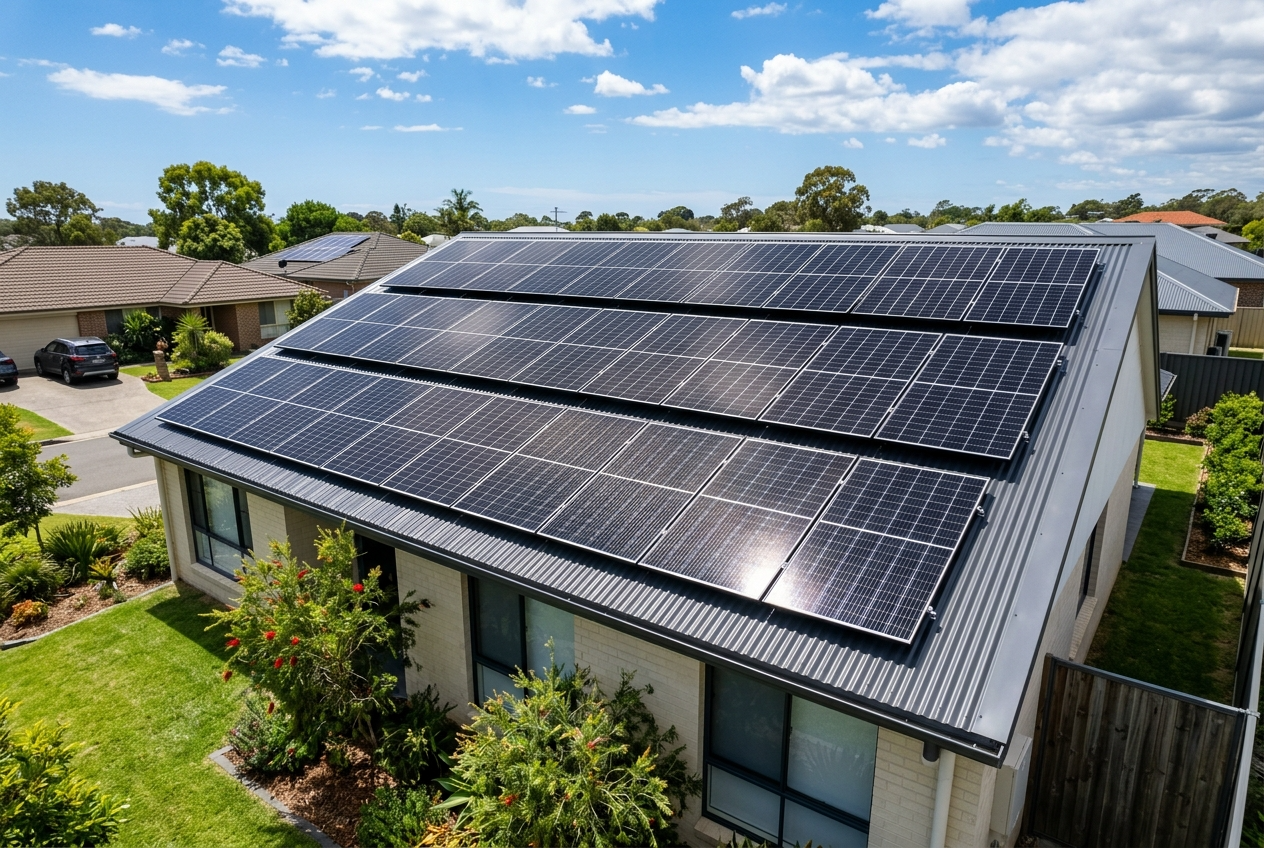
The physical installation involves mounting rails on your roof, securing the panels to the rails, running DC cabling from the panels down to your inverter, and connecting the inverter to your switchboard. Your electrician also handles the paperwork, including the grid connection application to your energy distributor and any required meter upgrades.
The on-site installation typically takes a couple of days for a standard home, though this can vary depending on the complexity of your roof, the system size, and access. Homes with steep roofs, multiple roof planes, tile roofs, or difficult access may take longer. Your electrician will give you a realistic timeline during the quoting stage so there are no surprises.
How to Choose the Right System Size
There's no universal answer to what size solar system your home needs. The right system depends on your household's electricity consumption, your available roof space, roof orientation, shading, and your budget. Your electricity bill shows your average daily usage in kilowatt-hours, that figure is the starting point for your installer to recommend an appropriately sized system.
North-facing roof space delivers the best output in the Southern Hemisphere, but east and west-facing panels still perform well and can be a smart option for homes that use more power in the mornings or evenings. A good installer will design around your actual roof layout and usage patterns rather than pushing a one-size-fits-all package.
Licensing, Accreditation, and Rebates
All solar installations in NSW must be performed by a licensed electrician who also holds Clean Energy Council (CEC) accreditation. CEC accreditation is mandatory if you want to access government incentives such as Small-scale Technology Certificates (STCs), which can significantly reduce the upfront cost of your system. Without a CEC-accredited installer, you won't qualify for these rebates, and your system warranty may also be affected.
Always verify that your installer holds both a current NSW electrical licence and current CEC accreditation before committing to any work. You can check electrical licences through NSW Fair Trading and CEC accreditation through the Clean Energy Council website.
Future-Proofing Your Solar Investment
Even if you're not planning to add a home battery or EV charger right away, it's worth making sure your solar system is designed with future expansion in mind. A hybrid inverter, rather than a standard string inverter, allows you to add battery storage later without needing to replace the inverter entirely. Similarly, pre-wiring conduit from the roof space to the garage during installation can save significant cost if you decide to install an EV charger down the track.
Planning ahead at the design stage is far cheaper than retrofitting later, and a good installer will raise these options with you upfront.
Frequently Asked Questions About Solar Installation in Gosford
Do I need council approval to install solar panels in Gosford?
In most cases, residential solar panel installations in NSW are classified as exempt development and don't require council approval, provided they meet certain criteria. Your installer can advise if your specific property has any heritage overlays or planning restrictions that may apply.
Will solar panels damage my roof?
When installed by a licensed professional using the correct mounting system for your roof type, solar panels should not cause any damage. Your installer will inspect the condition of your roof before installation and advise if any repairs are needed beforehand. The mounting system is designed to be weatherproof and secure.
How do I maintain my solar system once it's installed?
Solar panels require very little ongoing maintenance. An occasional hose-down to remove dust, pollen, or bird droppings is usually sufficient. Your inverter and system performance should be monitored through the manufacturer's app so you can identify any drop in output early. If you notice a significant performance decline, contact your installer for an inspection.
Can I add more panels later if I need more power?
In many cases, yes, provided your inverter has spare capacity and your roof has available space. Your installer can design the initial system with expansion in mind if you think your energy needs might increase in the future, such as adding an EV charger, battery, pool, or air conditioning.
Talk to a Local Central Coast Electrician
Considering solar for your Gosford or Central Coast home? Get in touch with our team to arrange a free site assessment and find out what system suits your property.