
Tesla Powerwall vs Sungrow vs BYD: Home Battery Comparison for Gosford Homes
If you're looking at home battery storage for your Gosford or Central Coast home, you've probably come across three of the most popular brands in Australia: Tesla Powerwall, Sungrow, and BYD. They're all solid options, but they each have different strengths and trade-offs. Here's a practical comparison to help you understand which might suit your home best.
Tesla Powerwall
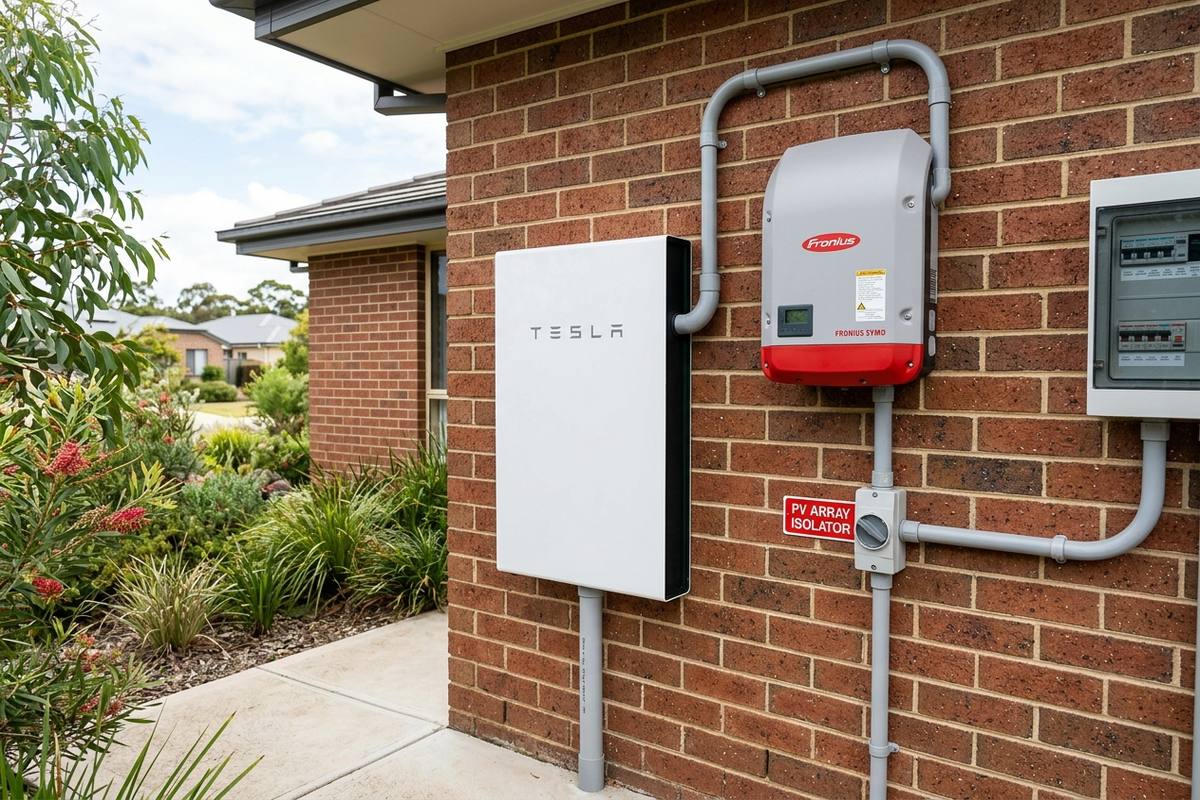
Tesla Powerwall is the most recognised home battery brand in Australia, and for good reason. The latest Powerwall model offers a high usable capacity, integrated inverter, and a well-developed app for monitoring and controlling the system. Installation is straightforward for accredited installers, and the battery has a solid warranty backed by one of the world's largest automotive and energy companies.
The main considerations with Tesla Powerwall are cost and availability. It tends to sit at the premium end of the market, and there have been periods where supply has been limited in Australia. If you're not in a rush and you want a battery from a globally recognised brand with strong local support, Powerwall is a solid choice.
Sungrow
Sungrow is one of the largest inverter and battery manufacturers in the world and has become increasingly popular in Australian installations. Their battery systems are modular, meaning you can start with a smaller capacity and add modules later as your needs grow. This flexibility makes Sungrow particularly appealing for households who want to scale their storage over time.
Sungrow batteries work well alongside their own inverters, which are also widely used in Australian solar installations. The warranty terms are competitive and the app is functional, though not as polished as Tesla's. Pricing tends to be more accessible than Powerwall, which makes Sungrow a strong value option.
BYD
BYD is another major global player with a significant presence in the Australian battery market. Like Sungrow, BYD offers modular battery systems that can be expanded over time. Their batteries are compatible with a wide range of third-party inverters, which gives installers flexibility when designing systems.
BYD batteries are known for solid construction and reliable performance, and they're often positioned as a value option compared to premium brands. If you have an existing inverter that's BYD-compatible, adding a BYD battery can be a cost-effective way to add storage without replacing your inverter.
How to Choose Between Them
The right battery for your home depends on several factors: your existing solar setup, your budget, how much storage you actually need, and whether you want the option to expand later.
If you want a plug-and-play solution with a strong brand and integrated inverter, Tesla Powerwall is hard to beat. If flexibility and future expansion are important, Sungrow and BYD both offer modular options that let you scale capacity. If you already have an inverter that's compatible with a specific battery brand, that compatibility can drive the decision.
Most importantly, the right installer will assess your actual energy usage, your solar generation, and your goals for the system rather than pushing you toward a specific brand. A battery that's too small won't deliver the savings you're hoping for. A battery that's too large is money spent that will never be recovered.
What Matters More Than Brand
All three of these brands make good batteries. In practice, the quality of the installation matters more than which brand you choose. A poorly installed premium battery will perform worse than a well-installed mid-range battery. Compatibility with your inverter, correct sizing, proper ventilation, secure mounting, and clean wiring all affect how the battery performs over time.
This is why choosing a CEC-accredited installer with experience across multiple battery brands is more important than fixating on one particular product. A good installer will recommend a battery that suits your specific situation, not the one that makes them the most margin.
Frequently Asked Questions
Which battery has the longest warranty?
All three brands offer warranties in the 10-year range with specific terms around cycles and retained capacity. The specifics vary by model and change over time, so check the current warranty terms at the time of your installation.
Can I mix brands, use a Sungrow inverter with a Tesla battery?
Not always. Batteries are often designed to work with specific inverter brands or types. Your installer will confirm compatibility before recommending a system. In general, sticking within one brand's ecosystem tends to give the cleanest result.
Do all three brands have good app monitoring?
Yes, though the experience varies. Tesla's app is widely regarded as the most polished. Sungrow and BYD both have functional apps that show live generation, consumption, and battery status. All three let you monitor the system remotely.
Can I use any of these batteries for whole-home backup during a blackout?
It depends on the system size and how it's configured. Most batteries can back up essential circuits during a blackout, but backing up an entire home typically requires a larger system or multiple battery units. Your installer can walk you through what level of backup suits your needs.
Talk to a Local Central Coast Electrician
Get a free, no-obligation quote from a licensed electrician serving gosford and the Central Coast.