

EV Charger Installation Costs in Gosford: What's Included and What's Extra
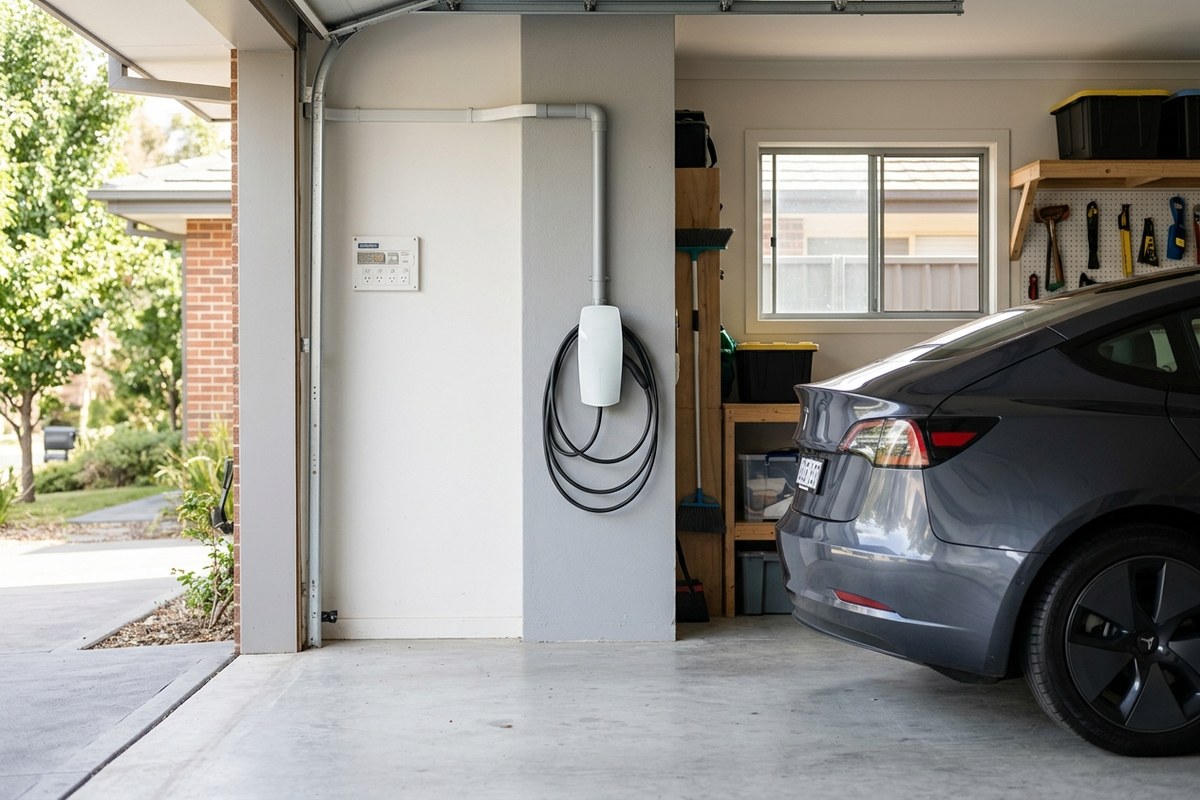
Setting up a home EV charger is one of the most valuable upgrades you can make as an EV owner, but the costs can vary significantly depending on your home and requirements. Here's a practical breakdown of what goes into a home EV charger installation on the Central Coast and what to expect in a quote.
What's Included in a Standard Install
A standard home EV charger installation typically includes the charger unit itself, a dedicated circuit from your switchboard to the charger location, the necessary circuit protection, mounting the charger on the wall, and commissioning the system. Your installer will also handle any paperwork required, issue a Certificate of Compliance, and walk you through how to use the charger.
The distance between your switchboard and your charger location is one of the biggest variables. A charger mounted right next to the switchboard is a simpler install than one that needs cable run across the roof space, along external walls in conduit, or under the house. Longer cable runs add time and materials to the job.
The Charger Itself
There's a wide range of EV chargers available in Australia. Basic chargers are less expensive and do the essential job of charging your vehicle on a dedicated circuit. Smart chargers cost more but offer features like app control, energy monitoring, load management, and solar integration. Tesla Wall Connector is a popular mid-range option for Tesla owners, while third-party brands like Ocular, Fronius, and Wallbox offer comparable features.
Some EV owners supply their own charger and only pay for installation. Others prefer the installer to supply everything so the whole package is covered by one point of contact. Either approach works, just make sure you're clear on what's included in the quote.
Common Additional Costs
Several situations can add to the base installation cost. The most common is a switchboard upgrade. Older switchboards often don't have the capacity to support the sustained load of EV charging, and they may need upgrading before the charger can be installed safely. This is especially common in homes with ceramic fuse boards or limited spare circuits.
Other potential additions include trenching for underground cabling if the charger is being installed in a detached garage or carport, additional conduit for long external runs, and load management devices if you have other high-draw appliances running. Solar integration features may also add to the cost if you want the charger to prioritise solar energy.
What Makes Pricing Vary
Two homes on the same street can end up with very different quotes for an EV charger install, and the differences come down to specific conditions. Switchboard condition, cable run distance, wall material (brick, weatherboard, rendered), access difficulty, and the specific charger chosen all affect the final price.
A good installer will walk you through your options during the site visit. If a switchboard upgrade is needed, they should explain why, what it involves, and whether there are any alternatives. If the charger location adds cost due to cable distance, they should explain this and potentially suggest a closer alternative.
Getting Real Value for Money
The cheapest quote isn't always the best deal when it comes to EV chargers. A dedicated circuit with a high-quality charger from a reputable installer is a one-off investment that should last for many years. Cutting corners on the installation to save a small amount upfront can create problems down the track, particularly if the charger is underspecified for your vehicle or the circuit isn't sized correctly.
When comparing quotes, look at what's actually included, the brand and model of the charger, any warranties on both the product and workmanship, and whether the installer is experienced with EV charger installations specifically. A sparky who has installed hundreds of chargers will generally do a better job than one for whom it's an occasional job.
Frequently Asked Questions
Can I reuse an existing high-draw circuit for an EV charger?
Generally no. EV charger installations require a dedicated circuit sized specifically for the charger's rated current. Shared circuits aren't recommended and usually don't meet Australian standards for EV charger installations.
What's the difference between a 7kW and 22kW charger?
A 7kW charger is single-phase and is what most Australian homes support. A 22kW charger is three-phase and requires three-phase power at your home. Most residential installations are single-phase 7kW, which is sufficient to fully charge most EVs overnight.
Do I need approval from my energy distributor?
In most cases yes. EV chargers add significant load and your distributor needs to confirm your home's supply can handle it. Your installer will handle this application as part of the installation service.
Will installing an EV charger affect my home insurance?
When installed by a licensed electrician and certified correctly, an EV charger should not negatively affect your home insurance. Keep your Certificate of Compliance for your records as proof that the work was completed to standards.
Talk to a Local Central Coast Electrician
Get a free, no-obligation quote from a licensed electrician serving gosford and the Central Coast.