

Data and Network Cabling for Gosford Homes and Home Offices
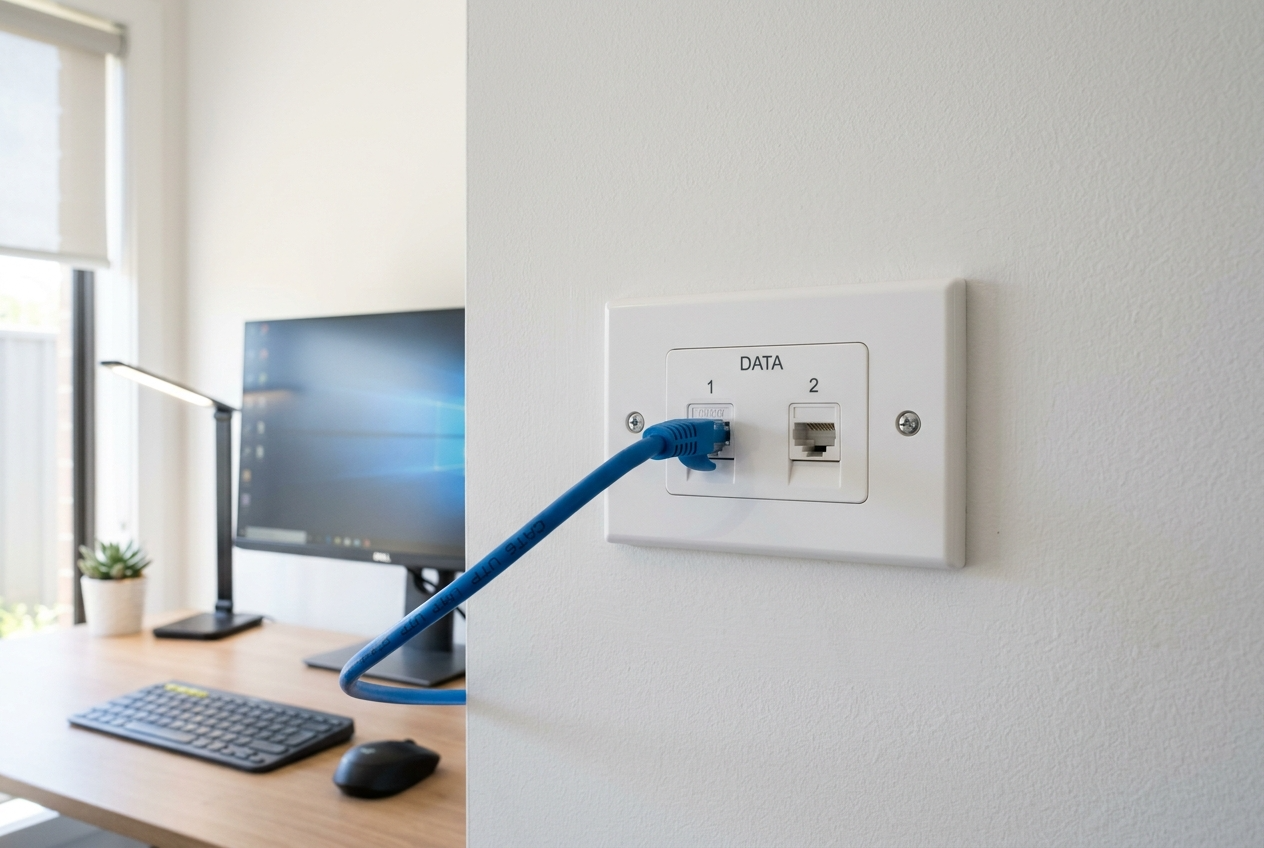
WiFi is convenient for phones and tablets, but it has real limitations when it comes to speed, stability, and reliability, especially in busy households where multiple people are streaming, working, and gaming at the same time. If you've experienced WiFi dropouts during video calls, buffering while streaming, or frustratingly slow downloads, the problem often isn't your internet plan, it's how the signal gets to your devices. Structured data cabling solves this by giving you a permanent, hardwired network that delivers fast, consistent connectivity to the rooms that need it most.
Why Hardwired Connections Are Worth It
A hardwired ethernet connection provides speeds and stability that WiFi simply can't match. There's no signal degradation through walls, no interference from neighbouring networks, and no bandwidth congestion when multiple devices are online. For anyone working from home, this means reliable video conferencing, faster file uploads and downloads, and a connection that doesn't drop out when someone starts streaming in another room.
What Structured Data Cabling Looks Like
Structured data cabling is a permanent installation where CAT6 ethernet cables are run from a central point, typically where your internet router or network switch is located, to wall-mounted data points in each room where you want a wired connection. The cables are run through the roof space and wall cavities, just like electrical cable, so there are no visible runs, no cables taped along skirting boards, and no messy tangles behind desks.
Best Time to Install Data Cabling
The ideal time to install structured data cabling is during a new build or renovation, when the wall cavities are open and cables can be run alongside electrical wiring during the rough-in stage. That said, data cabling can also be retrofitted into existing homes.
Where to Put Data Points
The most common locations for data points include the home office or study (essential for work-from-home setups), the living room or entertainment area (behind the TV for streaming devices, consoles, and smart TVs), bedrooms (for desks or study areas), and any room where you plan to use a device that benefits from a stable wired connection.
CAT6 vs Older Cable Standards
CAT6 is the current recommended standard for residential data cabling in Australia. It supports faster speeds and higher bandwidth than the older CAT5 and CAT5e specifications and is well suited to current and future network demands.
Frequently Asked Questions About Data Cabling in Gosford
Can data cabling replace WiFi entirely?
Data cabling doesn't replace WiFi, it complements it. The best home network uses hardwired connections for stationary devices that need speed and reliability and WiFi for mobile devices that move around the house.
How many data points do I need?
It depends on your household and how you use the internet. At a minimum, most people benefit from a data point at their main work desk and behind the living room TV.
Is data cabling included in a standard electrical fit-out for a new home?
Not always, it depends on your builder and electrician. Data cabling is typically a separate scope item that needs to be specifically requested during the planning stage.
Can I run data cables myself?
While data cabling isn't classified as electrical work under NSW regulations, running cables through walls and ceiling spaces alongside electrical wiring is best left to a professional.
Talk to a Local Central Coast Electrician
Want faster, more reliable internet at home? Get in touch with our team to discuss data cabling options.